This week continues a three-part interview series with local creative stallion, Aleah Fitzwater. Ranging from visual arts, music, to poetry and more, Aleah is carving a unique space for herself in the wide world of artistic expression. Her website is located at https://aleahfitzwater.com; here, you can learn more about her specific projects, check out her music and photography portfolios, and follow along with her blog ‘Fusion!’
Based on a podcast style interview format, Aleah and I shared a sprawling conversation, first talking about some of the software that she has been using recently in her musical process; later, Aleah shared her perspectives and insights on her approach to practice as it relates to the many artistic mediums she enjoys creating through. Finally, we chatted about photography and what lies ahead in the future, brainstorming upcoming collaborative projects together.
Sam: Could you tell me a little bit about how you got interested in photography and what your process looks like?
Aleah: I first got interested in photography because… well, actually let me backtrack to a story about my mom! This is the story of my formative origins as a photographer… When I was a very young child, my mom took me to JC Pennies or [some store like that] to get my photo taken. I was in this pretty little dress and green sparkly shoes, but by the time that we got to the store, one of my shoes was missing!
S: What did you do with your shoe?!
A: I don’t know! I was three! And my mom she was [panicking] like “Oh my gosh! She doesn’t have a shoe!” and I was crying… and [the whole situation] wasn’t really [showing] me. My mom wanted to capture me [in my element], so my dad got her a Minolta camera (which is basically a film camera) [so she could get some natural pictures of me]. When I was a toddler, I grew up around my mom taking pictures of me with this film camera. Eventually, she got a digital camera, and as soon as I was old enough to be able to hold it, I started taking pictures!
We would go on trips to West Virginia and apparently I would say “Take picture? Take Picture!” and she would just hand me her camera! Well then, fast forward a bit and my first camera was a digital Nikon – loved it – then in high school I started taking digital photography and Photoshop classes, I bought my own Photoshop program, and I started noodling around. A lot of [my process] was self-taught, [but] some of it was informed by those initial high school classes.
Then, I ended up putting in some proposals online through Submittable for some different abstract pieces. It’s funny, people always take my abstract pieces and they DON’T want my macro butterflies… nobody wants my macro butterflies, it’s fine. BUT! I [submitted] a few of my abstract pieces, some of which included: textures from trees, reflections into water that I altered significantly, and self-portraits… Some of them have made it in galleries in Portugal and Rome…
Fiery Macro Butterfly – Aleah FItzwater
S: Wait, you’ve had things on display overseas… in galleries?! Did you have a chance to go to the premiers?
A: Absolutely…not. But I thought that it was really interesting… There were two that I was REALLY proud of; there was one that was in Rome, Italy and it was very odd that it was displayed because it’s actually a self-portrait [laughs]. I wasn’t expecting it to get in at all. It was for [a series] called the UnderWater Exhibition, so it was supposed to be for things…underwater.
I had taken a picture of water and soap bubbles, and I also had an old profile picture of myself. I took the bubbles and I edited them to look like multi-color chrome – but they definitely still resembled water. Then I took this watery edit and stamped it onto the photo of my profile, which created this really interesting texture…and THAT was displayed for several weeks in a gallery.
“Dark Water Rhapsody” – Aleah Fitzwater Premiered in Rome, Italy
The other one that I was proud to have chosen was for an environmentalist-themed gallery in Portugal; this exhibition was based on photography displaying human destruction of natural resources. It was really weird because it was exploring the theme of destruction, yet we were finding beauty IN the destruction, all while advocating for the preservation of the earth’s natural resources. For me, it was strange taking pictures of human destruction, because of course I wanted it to be beautiful, but in a certain way, it’s not beautiful at all.
S: Whoa, whoa, whoa, that’s really interesting, trying to find a way to hold these two completely contrasting perspectives in focus at the same time. What image did you end up submitting?
A: I was digging through my old stuff – I do that a lot, because there are a lot of pictures that I forget that I’ve taken – and I had taken a picture of a graffitied quarry in West Virginia. Since the time I first took the picture it’s gotten worse and worse. I mean, there are stories of people dumping entire campers and horses inside of this quarry…
S: Whoa whoa!
A: It’s absolutely terrible… So that’s the first place I thought of when I saw this competition. I submitted a picture and they DID invite me to the premier, but OBVIOUSLY I couldn’t make it to Portugal – I don’t have those kinds of funds. But it was also printed in a magazine; It was a picture of these beautiful layers of red-brown rocks in the quarry in West Virginia, and on top of that, all the layers of graffiti from over the years. And the graffiti is super high up too, I was impressed that somebody even managed to find a way to spray paint those rocks!
“Montanha Festival” – Aleah Fitzwater Premiered in Azores, Portugal
S: Did you get paid commission?? Because I think you should have!
A: That’s really funny that you should say that. You’re the only person that has ever paid me for my photography when I did your head-shots. Shameless Self-Plug: a few pieces of my art are available as non-fungible tokens on the digital marketplace platform, OpenSea.
A: Yea! The artist Grimes put up one of her paintings and it sold for over $1,000,000… and well, I’m not expecting that, but I think it’s really interesting, this emerging craze over original digital files. I have a lot of those, so I thought it’d be worth putting up some art.
S: I’d be interested to hear about how that process unfolds over time!
A: Yeah, I think I need to do a lot of promotion that I don’t really have time for right now, but it’s on the list.
S: You and I have done some collaboration with glow-juggling and nighttime photography, can you tell me a little bit about the process you use to derive such cool final projects?
A: Night photography and working with light are some of the hardest aspects of photography. For those pictures, I used a setting called bulb. Bulb allows me to control the shutter speed with my finger. Usually when you are running a camera, the shutter speed is a predetermined number that you can change with a dial. But since the way you were moving and the patterns you were using were constantly changing, I decided to take the shots with bulb – that way, I could watch you, and whenever I decided to lift up my finger, that would determine my shutter speed.
“Bubbly” – Aleah Fitzwater
S: That’s so cool!
A: Sometimes it would turn out super underexposed or overexposed, so there is a lot of experimentation in that process. When taking photos like that, with manual shutter speed and bulb mode WHILE the subject is moving, it’s really interesting because I can’t actually see where you are through the lens. So I have to guess where you are and try keep my hands super still! The second I push down my button, I actually can’t see you; sometimes I look over my camera, but I can’t see you through the camera – I have no idea what the camera is going to pick up until after. There is a lot of spatial guesswork!
“Magick” – Aleah Fitzwater
S: That’s CRAZY! It was so much fun to do that with you, can we do that some more? And what about on the editing end? How did you do the editing after the photography-magic voodoo you were conjuring?
A: So I pop it into Photoshop and I crop it to the rule of thirds – this way, the design that you’ve danced into my camera is centered in a pleasing way. Usually, you don’t find true darkness, so I have to adjust the black levels and the individual colors. Then, since you were further away and were using the colored LED balls, I adjusted the saturation. I do this ONLY after I fix the light and dark balance, because if you don’t, you could end up with the night background looking a little…green.
So I crop, edit the background and darkness (sometimes I have to steal parts of black from other parts of the picture and then paint it in by hand), then adjust the saturation.
“THAT is juggling?” – Aleah Fitzwater
S: And the saturation changes the juiciness of the colors?
A: Well, too much can make it look a little grainy, but just a little bit of saturation makes it look more accurate to what you see. It’s interesting, because actually, when a camera takes a photo, it’s not actually accurate to what your eyes are seeing. I don’t really have a lot of problems with using Photoshop. Some people do, some people are like, “Oh my gosh, no, I want it to be exactly how it is.” But a camera is a representation of what you see already, and it’s never going to be accurate, so I don’t see anything wrong with light editing.
With yours in particular, some of the pictures you have on your site, I did a little bit of reflection or kaleidoscope effect with your patterns.
“Kaleidoscope 2” – Aleah Fitzwater
S: I remember we had a few pictures of fire and you talked about turning it into a DRAGON! Have you encountered this wild creature in the realm of your Photoshop creations lately??
A: *Shakes head “no” laughing*
S: My last question is: Do you have any projects you would like to collaborate on in the future?
As far as digital art goes, I would love to work with your sketches in Photoshop again sometime.
S: YES! OH MY GOD THAT FUCKING WAS AWESOME!
A: If we could do that blend of sketch and digital art again – some sort of fusion between those two mediums – that’d be really fun because I love working with textures!
“And Then, Blooms” – Samuel Rugg and Aleah Fitzwater
S: Yes. Yes. Yes. That is so inspiring to me, the way that you turned that around and brought it to life, was like [exclaiming loudly and sputtering with excitement!]
A: [Laughing] I love things and – I wanted to transform it, but I didn’t want to change the feeling, I liked working with and guessing what your intention was and then working from there!
I know that you do a lot of electronic-sort-of-experimentation with music. I actually have a way to animate photos. If you ever wanted a video for some of your music, I would absolutely love to let you riffle through my stuff. Then I could animate something and we could put something visual with your music!
S: Oh, I would love that! I just need to get my ass in gear! I was just looking through some of the snippets that I have on my computer before our conversation; there are little pockets of things, some are like, “Eww,” [shudders] “What the fuck was THAT?!”But othersaren’t so bad…
A: [Laughing] Oh yes, I have PLENTY of those too… that is why we have external hard drives.
S: Yes! The visualized art and music sounds SO cool.
A: I’d also really like to do a collaborative album – nothing too complex or layered, sort of a minimalist poetry album, kind of like that previous poem we worked on together. I’d love to record spoken word poetry, send it to you, and let you produce it however you want. That sound SO cool to me.
S: I know we talked about about record called **** ** *** ***, that took those same ideas of spoken word and poetry and spliced them with acoustic guitar. I’m still really interested in that too.
A: Well, there is no shortage of poetry to work with.
S: Amen. Thank you so much for taking the time to hang out with me and share your process, it was so fun!
A: Oh my gosh, it was so fun!
This concludes part 3 of of the 3 part interview with Miss Aleah Fitzwater; Thanks Aleah for taking the time to share a glimpse into your photography practice and for brainstorming ideas with me!
Aleah is an advocate of ScanScore for her arranging process; we talked at length two weeks ago about the usefulness of ScanScore for arranging. For more info, check out the software here!
If you like what you see, please subscribe! And if you’d like to set up an artist interview, please feel free to send a message or drop a comment!
This week continues a three-part interview series with local creative stallion, Aleah Fitzwater. Ranging from visual arts, music, to poetry and more, Aleah is carving a unique space for herself in the wide world of artistic expression. Her website is located at https://aleahfitzwater.com where you can learn more about her specific projects, check out her music and photography portfolios, and follow along with her blog ‘Fusion!’
Based on a podcast-style interview format, Aleah and I shared a sprawling conversation, first talking about some of the software that she has been using recently in her musical process; later, Aleah shared her perspectives and insights on her approach to practice as it relates to the many artistic mediums she enjoys creating through. Finally, we chatted about what lies ahead in the future, brainstorming upcoming collaborative projects together.
This interview is part two of a three-part series.
Pt.2: The Art of Practice
This is an extension of research I began in 2017, the last year of my undergraduate studies, and is something I still actively cultivate and pursue in my artistic process. The whole idea for the project was inspired by my direct experience with Zen Buddhism and the necessity of practice within music school. I was, and largely still am, completely fascinated with the experience of engaging with life in a direct, intentional, and ritualistic way. Back then, perhaps for the first time in my life, I found myself equipped with an awareness capable of recognizing a deep need to practice – to clearly identify the limits and edges of my ability as an artist, a musician, and as a human being in general. After this fundamental recognition, I found myself exploring intensely personal ways of working with my own barriers, both within my musical training and within my own personal life.
Then I got to wondering, how do musicians at all different stages and of all calibers approach practice? I wondered what it would be like to conduct and assemble research about artistic individuals and their practice habits, then to share the information with the larger artistic community, as well as to apply my findings to my own art-making process. I finished the project in a certain sense – I turned it in, received a grade, and graduated. But it felt incomplete in the sense that there was a very small data set; I feel like there are a lot of interesting artistic perspectives out there that I haven’t yet heard, and I would love to continue cultivating and sharing my research.
Thank you, Aleah Fitzwater for sharing your time and perspectives with me and with the wider artistic world!
Sam: So, would you mind sharing what your personal relationship to your art and music practice looks like?
Aleah: Oh gosh. I would describe my relationship to art and music as complicated. That’s the first word that comes up. The next thing that came to mind – it’s interesting that the word “complicated” shows up for me, because, so many people that I personally know have covertly bashed my art and music in some way. In working to rebuild from those hang-ups that we all develop as we stumble through the world of the arts, things can appear very much black and white. Sometimes I’m always doing art and music; other times, I’m just thinking about it but not acting on the impulse. I’m always thinking about it though.
My relationship with the arts has definitely changed since I’ve graduated. All that being said, I feel more myself when I’m making music. This sounds cliche but, it’s part of who I am. So, whether I’m pouring resin, writing, or playing music, it’s always has that same feeling. And the impulse to create is always present.
S: So your relationship to art is complicated and evolving? And maybe omnipresent and pervading throughout your life?
A: Yeah! And I’d say that a lot of the different arts give me a very similar qualitative sort of satisfaction. So like, if I’m demolding something I poured in epoxy, or if I’m playing Poulenc, it just all has this really nice, ASMR feeling.
S: Yeah! Well, there’s something really satisfying about using the contents of your life in the current moment, actively transforming reality through some medium with a creative impulse. That’s absolutely satisfying, I feel you there, haha.
Do you have any internal stances, mindsets, or feelings in regard to your art-making process?
A: It’s funny because the only strong sense I have is a stance of impermanence, or, no hard stance at all. I know that my process is going to be different every single day. When I wake up, it’s a totally different day. And I guess I always expect my process to be different, kind of like the weather.
And I’m okay with it. I mean, sometimes I do have certain habits, but, for the most part, I wake up and I don’t know if I’m going to write a poem with a bunch of half-rhymes, pour something in epoxy, or if I’m going to turn on my recording equipment. I mean, something is probably going to happen. But as far as strong permanent stances on things, not really. I’m okay with the weather pattern (laughing).
S: That’s very interesting! And it sounds like, for you, it’s very much motivated by the spirit of the moment as you move through your day. You have your environment primed for these different artistic moments to unfold… maybe piano, flute, or recording; you’ve got visual art stuff, you have all of your creative tools on hand. Whatever inspires you that day, you’re open to, willing, and at peace with being able to say “Hey I’m going to take this train to wherever it goes.” That’s cool.
A: I mean, I’ve tried it before where I would say “Okay, I’m going to practice piano every single day. And I mean, I should practice piano more than I do, let’s be honest. But, unless I feel really taken with the piano, I find that I don’t get as far. I think it’s okay to have certain time periods of hyperfocus because it ends up turning out better than if I force myself to practice. It just doesn’t have the same sparkle.
S: I think that, for me, the way that I’m wired, I always come back to this impulse to maintain a daily grind. I don’t know if that’s necessarily the best or only way to relate to practice, but it’s a feeling that I can’t seem to escape – like I need to maintain my daily practice. I think that the spontaneity and the inspiration often comes (when this ritualistic approach is functioning at its best) through the grind. The ritual creates such a concrete foundation that I get sick of it. Then it’s like, “I’m gonna do ANYTHING just as long as I don’t have to play the (same fuckin’ stupid) thing again.” As a result, I’ve got so many fragments, moments, and sketches of musical ideas that emerged through the process of formal schooling, which, in a certain way, was kind of miserable for me.
Creativity birthed out of concrete rigidity.
And so that is still a difficulty that I face: what’s the balance between spontaneity and cultivating and maintaining a healthy musical “garden?” I tend to be really bad at taking care of plants unfortunately… it’s something I-
A: I spent 4 hours today gardening, so it’s really funny for me to hear you say that. Also, I wanted to say, I think there’s a big difference in (even though we went to the same school) the different programs that we were in. It seemed like, as far as the jazz school goes, you grind and you grind, and then, on “Jazz Night” on a given Tuesday, at whatever bar is hosting the jam, after all of your grinding, THEN you are allowed to be free and do what you will and solo and whatnot. You’re not memorizing charts on Tuesday night; you’re just having fun with it. So say, I was in a flute choir, and marching band, and private lessons, orchestra, and wind ensemble all at the same time. I think the reason I am the way that I am now is because of all of these ensembles. We would grind and grind, and the end of it all, there was a concert… [that was the exact same music…the exact same way]. Not to say that that’s bad, I love Dvorak, but we never really got cut a break in the same way. [For me,] you couldn’t just go to the bar on a Tuesday night and play whatever you wanted during your solo. It’s also odd though, because, during classical lessons, my professor would so often say “Play in the dark, play with your eyes closed!” But I just [funneled] down such a straight line that I really needed to transform my relationship with the arts to something more spontaneous.
S: Yeah! More spontaneous. And it sounds like you’ve discovered something that is more flexible and that serves you and works with your life much better than “Don’t veer off the course until the concert and then we do the whole thing again.”
A: Right! So, if I play scales from Taffanel and Gaubert, I don’t then treat myself [afterwards] and then make something up. I just play Taffanel and Gaubert for 4 hours like I’m in the practice room in college again. It’s a broken method, I had to change my method.
Taffanel – Andante Pastoral et Scherzettino
S: Interesting, that makes sense! The next question: Does a sense of ritual inform any of your art practices? Even in your flexible approach to art making, how do you engage with it? Do you find that there is a sense of ritual inside your spontaneity?
A: I do! Especially for music. It sounds odd, but yeah, I get myself in a certain mindset. I guess the ritual [for me] is: I think about it a little bit, think about it some more, and then I decide. Once I decide, I make a cup of tea and eat a piece of chocolate, and then get started. It’s super simple.
S: Yeah! That’s beautiful. That’s exactly what I was wondering about! And so, how do you like to practice?
A: I like to practice by starting out with something I’m super comfortable with. Something I know I’m not going to mess up. So, it revs up my confidence engine. And then, after that, I choose something more difficult. This is after my sound is warmed up and clear. So, that brings me to the idea of tension, I’ve been thinking a lot about tension lately. As I practice, I gradually turn up the ‘knob of uncomfortability.’ Then, I find a limit. I go past that limit, and I think, ok, that is my limit. So then, after I know where [my limit] is, I go back and I practice really slowly. If I keep pushing the limit I get tension problems, and you can’t play fast with tension problems. After that, I start speeding it up and work on it for a while. After that, I let it go and do something else.
S: That inspires me. When you find these barriers, do you have a way of working with the thresholds and ceilings of your ability? Do you have a way that you like to organize and clarify what you need to work on?
It might be interesting, from a processing perspective, to compile a notebook of ‘Barriers Difficulties” that one encounters in practice. It seems like, for me, it could be extremely motivating to have a clear map of the things I need to work on, the things I can’t do.
I know that sometimes I get stuck in what’s comfortable and familiar, and so I’m always looking for new ways to challenge myself to grow and integrate. In the past, I know that sometimes I have fudged my way through barriers, passages, moments that give me trouble, and changes I don’t know how to address…
If I wasn’t careful, this notebook could turn into a masochistic party…
A:(Laughing) I was going to say, it seems like this could be a very sad book!
S: But, in a way, I feel like it could be really empowering to recognize, “There’s this thing I can’t do, and now, I want to work with it.” Then it’s a process of engaging, maybe failing, trying again, and hopefully crossing it off the list and knocking it out of the park.
A: Well, this is what I do. I have the piece, Carmen Fantasie. It’s beautiful. It takes a bunch of different themes from Bizet’s opera and turns it into a flute concert/theme and variations. And it’s very technically difficult. What I like to do with that is, I allow myself to play through the pretty parts that I know; because, if [I] just work on the 32nd notes, I find myself getting really bummed out. If you’re bummed out with the fast notes, you’re not going to want to make music.
S: That’s true!
A: So, I play through the beginning, because the beginning makes me happy. Then I delve into a bunch of difficult things. But when I find myself losing even an ounce of patience, I go back and I play something pretty. And then I think “I’ve almost learned this piece, if I finish polishing up these 4 bars, then this page will be done” So I allow myself to toggle back and forth.
S: That seems really healthy. I know for a fact that I have a tendency to grab onto things and to sometimes practice in a way that goes past the point of necessity.
A: Yeah, that’s a recipe for tension. I made that recipe a lot. I still make it.
S: I understand.
But that’s really interesting; it’s kind of a mix of “Here’s this thing I can’t do,” awareness and the intention to work at the edge of your ability, and also, a recognition and reminder that “This music is beautiful and I love to play this piece.”
I dig that.
Do you have any ways that you use to keep yourself engaged in growth in these different artistic fields?
A: Like I said, I’m always thinking about doing art, but a lot of the time just I think of it and I don’t act. When that happens, I go and print off something I really want to play. For example, I really want to learn Paganini’s Caprice 24. Which I do. And I haven’t yet. I put just this one thing out on my stand. And then I let it sit there.
And I let it sit there, and it bothers me.
S: It’s like a teabag! It’s steeping!
A: Eventually, I walk up to the stand and I just do it. It’s kind of like when I go Hobby Lobby and I buy a bunch of things at the craft store that I don’t know what I’m going to do with yet. I leave it in a bag on the kitchen table. I’m a very organized person, so the fact that something is out and kind of messy really draws my attention. I don’t know if it’s the best method… I kind of feel like I’m tricking myself into doing it but…
S: I think that that’s brilliant! That’s a really good idea. It reminds me of seeds in the soil, or the tea bag steeping…
I have so many piles of music around here…
A: But the piles are intimidating, they make me freeze up and get anxious!
S: I know, and I lose track of things. I’ve got these lyrics I’ve written, tunes I’m working on, all these books for lessons…. some business junk that’s partially done.
A: Right! So I find that stack, I clean it off my stand, and I clean my stand. That’s my ritual too. And I put the most important thing I need or want to do on there.
S: I might have to use that in my own process…
Do you find that your insights into your art-making process inform other aspects of your life? If so, how?
A: Well, I’m not sure that I could say how the arts inform other aspects of my life, but I can say that my different art practices definitely inform each other. I find that my music informs my photography and digital art, especially because music makes me think of textures. When I play a lot of music I think: Textures. Maybe aurally, but you know! Then I pick up my camera and I find myself taking pictures of things with texture. (Laughing) Once I even took a self-portrait with my hair, and I was like “Wow, what an interesting texture!” And later in Photoshop I made a kaleidoscope of it; I did a bunch of wacky things with the dropper tool and colors. And usually, it all turns out! Music causes me to want work more with textures, but visually!
Since music is so ingrained in my brain, it is always informing my life – I can hear a lawnmower right now, and I can’t help but wonder, “What is the pitch it is sounding at?” And I can I see it as the bass of the current orchestra of life that is playing in this moment.
Oh! And when I meet new people, I think “How would I write them in a book?” and I internally write a poem about them. Sometimes I see people as walking poems…
S: Whoa, that is beautiful! I like that very much! I didn’t realize that…
That made me think of a few things: I find a similar crossover between music and art in my own process as well. A long time ago I wrote this odd-time, wacky looping guitar riff. I loved it and played it over and over again. The more that I played it, the more that I realized that it had this visual element about it. I was studying how the melody moved across the neck and one night, I just decided to actually sit down and draw out the abstract motion on the page using the flow of the sound along the fretboard as a guide.
And going back to that idea you mentioned – when you first meet a new being, you think to yourself “Who is this person as a poem?” I’m going to have to sit with that one, that’s so cool!
S: I’m curious about the impulses that drive you towards creativity. Can you share some of these experiences?
A: I have a hard time with this one, because I can’t think of any hallmark experiences that made me say “Ok! I’m going to be an artist,” or “I’m a musician now!”
There was one time where I wrote my first set of lyrics when I was 5, and I really surprised everybody around me – but I don’t think that I felt very surprised myself. I’m not sure if I decided so long ago that I can’t remember, or that it’s something that always was, but it something that kind of just is. I have found that when I have tried to make decisions that lead me away from the artist’s path, I am often met with a lot of resistance.
I’ve been told I CAN be a very logical or mathematical person, so I thought I’d try and take a “safe” route after high school and go into accounting – there are always accounting jobs. I tried to sit through the introductory workshop, but I had been thinking “visual art, music education, creative writing!” I had written these things down dozens of times as degree path ideas.
S: The holy trinity!
A: Maybe even a side of horticulture and photography. I thought I’d try accounting for a year. Well, I actually tried accounting for 10 minutes in one little lecture hall for an introduction as a freshman.
And I couldn’t take it.
Everybody already knew how to read graphs, and they LOVED graphs. And I was like, “How can somebody love graphs?”
*Visible Confusion*
I was thinking, “I love music and poetry like you love graphs.” Their arms were up in the air and they were cheering and waving…for graphs. And I just felt this sinking feeling, and I actually left. I walked out of my own college initiation… I left after lunch.
I just knew. I looked around and thought, “This is not my place. And these are not my people.” No offense mathematicians. Any other path just didn’t quite jive.
[After the strange graph party,] I walked myself straight into the music department instead.
S: I’d love to hear about any crossover experiences, inspirations, or insights you’ve had in your practice of art through multiple mediums. We did mention this a bit before, but I’d love to hear about any specific experiences you’d like to share.
A: I’ve been doing so much gardening today – it’s really been on my mind. I think gardening is an art I’ve taken up too; and today I thought of an allegory that relates to this question. I always want to garden like I always want to grow my hobbies and my art. I recognize through gardening, that the plant can always get taller; and though it might not always be time for it to bloom, you still get a positive result if you put the effort into nurturing the plants.
This recognition of the benefits of caretaking informs the way that I relate to my different art practices: photography, visual art, poetry, music… There’s always a positive result if you put the effort into cultivating your arts – the idea of consistently adding fertilizer to these things. You’re eventually going to get a good result.
Also in regards to this idea of crossover effects, I think for me, poetry crosses over with my music a lot. The lines between poems and lyrics get blurred a lot; I think that the musicality of rhymes and syllables makes me wonder, “Is this a poem, are these lyrics, what do I have here?”
I’ve always thought of doing poetry book with my photography and matching it together. I have A LOT of raw materials to sort through; I just haven’t done it yet, but the idea of it is there.
S: I think that allegory of gardening is interesting, I relate to that metaphor in my own practice –
A: (laughing) Have you LOOKED at your windowsil basil?!
S:It’s – it’s looking kinda sad, it’s a SAD basil plant.
A: There’s like ONE LEAF LEFT!
S: There is more than ONE leaf! There’s like… three, ehrm. I’ve had A LITTLE bit of success with gardening back in time, but that’s informed my relationship to learning too!
I’m kind of a weird cat, I, somewhat randomly, decided to teach myself how to write with my left hand because I realized I had two, so like, why not?
A: I made a similar decision too back during my senior year of high school, so I feel you there haha! It might be a musician impulse because we use both of our hands a lot.
S: Sure! For me, I always wondered what it might be like if both of my hands could write at the same caliber. What if I could write two different paragraphs at the same time? That kind of thing has always interested me.
The same allegory of “The Arts as a Garden” has shown up for me in learning how to juggle, learning how to play guitar, and cultivating new skills and practices that I had no previous experience. I realized, “Man, this is something that I need to nurture.”
Now I think I’ve had way more success in cultivating the garden of my artistic habits than I have with actual gardening (laughing).
I think it’s really interesting in that allegory – even if it’s not blooming right at this moment, taking care of, adding fertilizer, and nurturing this process will eventually and quite naturally lead to the bloom.
For you, I think it’s really interesting that you have these two, almost contrasting perspectives active in your arts practices. On one hand, you are very garden-minded, consistently taking care of and nurturing your plants and art practices; but on the other hand, you tend to take a much freer approach to your arts, cutting out the unnecessary rigidity and flowing with the ‘weather patterns’ that move you day by day.
For me, I feel like I need to stamp myself on the forehead, like “WATER THE PLANTS, FOOL!” I really want to cultivate a more regular nurturing approach to both gardening and my own art practice.
A: Well, sometimes I feel that I need a healthy dose of that too; everything isn’t always there for me either, but that’s my ideal framework. That’s what my process looks like when all the wheels are turning.
S: Lately, I’ve been reading this book, Atomic Habits, that I think you might dig. (More info at jamesclear.com) It’s been getting my gears spinning on a daily basis, I think I’ve finished it twice now (laughing), it’s really interesting. The whole premise is based on the idea of making microscopic but reliable change to your life on a regular basis can lead to HUGE results.
A: Yeah! I think that small amounts of practice, but more consistently prove more helpful than GIANT chunks and cramming.
S: For me, I have been finding myself asking the question, what do I actually need to do to keep developing? How do you address that when it shows up in your life?
A: A couple of months ago I had an online concert and I realized I need more solo repertoire. So, I allowed that to be the target of my hyperfocus. I think that allowing a period of hyperfocus is really important to me, because if I focus on too many things all at once I get anxious and overwhelmed. If I sit and think to myself, “Oh my god, I need solo flute rep, but oh my gosh my high range is unclear and my vibrato needs work, my fingers are too tense…” [it becomes unhelpful]. Allowing myself to hyperfocus on things for short periods of time allows me to get more done than if I focused on everything, 100%, all at once. That’s what works for me
S: I think I do something similar. I find that when I decide to just hang out with some practice for a chunk of time, hyperfocusing on the nuances of what I am doing, then when I let go and forget about it, and then come back later, it has changed. It seems like there is germination period where the work that I’ve done has subconsciously grown. There is something magical about intensive, focused attention, letting it go, then coming back to it.
A: That reminds me of studying! I used to make flashcards for biology; I had like, over 100 of these things. I would spend an hour studying them, then I would then go to sleep. The next day when I pick it back up, the information is just there somehow… in a different way.
S: (Laughing) I think that sleep is a really interesting part of the process of learning, but that easily could become a whole topic of discussion! Maybe we can come back to that sometime!
This concludes part 1 of of the 3 part interview with Miss Aleah Fitzwater; Thanks Aleah for taking the time to share a glimpse into your process of practice. Aleah is an advocate of ScanScore for her arranging process; we talked at length last week about the usefulness of ScanScore for arranging. For more info, check out the software here! Stay tuned next week for Part 3 of this Interview, where we will explore topics related to future collaborations!
If you like what you see, please subscribe! And if you’d like to set up an artist interview, please feel free to send a message or drop a comment!
This week begins a three part interview series with local creative stallion, Aleah Fitzwater. Ranging from visual arts, music, to poetry and more, Aleah is carving a unique space for herself in the wide world of artistic expression. Her website is located at https://aleahfitzwater.com; here, you can learn more about her specific projects, check out her music and photography portfolios, and follow along with her blog ‘Fusion!’
Based on a podcast style interview format, Aleah and I shared a sprawling conversation, first talking about some of the software that she has been using recently in her musical process; later, Aleah shared her perspectives and insights on her approach to practice as it relates to the many artistic mediums she enjoys creating through. Finally, we chatted about what lies ahead in the future, brainstorming upcoming collaborative projects together.
This interview is one of a three part series.
Pt.1: Blogging and Optical Music Recognition
Sam: I know that you are a writer, musician, and artist, could you tell me about the different projects you are working on?
Aleah: Sure! Lately, as far as my career goes, I have been working on a lot of music blogs. I write for an OMR software company, I review instruments like piano keyboards on various sites, and sometimes I write about mixing and mastering as well.
As far as personal projects go, I’ve been recording a lot of spoken word poetry, and have been arranging Northern Downfall for five flutes.
S: Can you tell me a little bit about those last two projects that you just mentioned?
A: I find myself writing poetry a lot, oftentimes words just kind of fall out of my head, and I need to write them down. I’ve been trying to be more open about sharing my poetry more recently. I was inspired to arrange Northern Downpour because, on the Pretty Odd album, Panic! At the Disco uses a lot of MIDI flutes. One day when I was listening back to some of the songs, it made me laugh. I love Panic! But, I thought, “Man, MIDI flute…” I chose Northern Downpour in particular because it has a lot of movement. Even though I’m stacking the same instrument on top of itself, it has enough texture for that sort of setting to make it work.
S: You mentioned OMR technology? Could you tell me a little bit about what that stands for and what it does? Because I don’t actually know.
A: Well, you should! So, OMR stands for optical music recognition. It’s kind of like computer science and sheet music had a baby. Basically, optical music recognition teaches your computer to recognize music elements, and it digitizes them into an editable format.
So, before OMR really was a thing, we would have all these PDFs. People love putting music in PDFs. But, say you want to arrange a piece of music in PDFs. Before OMR, there was no easy way to digitize that music. So, you’d have to spend hours typing it into Sibelius.
In the ’80s the college MIT had the idea to start doing optical music recognition like the way text was currently being digitized with OCR Technology (Optical Character Recognition). OMR is a lot more complicated than OCR though, because of how many elements are in music (staff, note heads, key signature, articulations). And that’s why this technology took a lot longer to develop, too.
One of my favorite things in the history of OMR is this robot called WABOT. Originally it was this robot that could move its limbs and whatnot. WABOT-1 wasn’t really related to music, but WABOT-2 played the organ with its ‘fingers’ (https://www.sciencedirect.com/science/article/abs/pii/0167849387900027 ). That was the first really big piece of optical music recognition hardware/software. It didn’t take long for them to learn that, well, all these arm and legs and fingers don’t really help us digitize the music in the way we’re looking for.
S: That’s so interesting! So did it have mechanical fingers and a camera?
A: Yes, yes it did! It literally read the music and played the organ.
S: How has OMR evolved past that point? Is that what this software ScanScore is doing now, are they building little robot buddies with mechanical fingers?
A: No no, that was very early in the synthesis of the idea. Now, it’s more along the lines of a companion program to Forte notation software or Sibelius, Musescore, anything like that. A lot of the times notation programs have some OMR capability, but, it usually isn’t very good. What I like about ScanScore in particular is its accuracy. In addition to this, it has a mixer, and you can edit the misreads really easily.
S: Wait, I know Sibelius has a mixer tool too; you can adjust the levels and pan of the instruments. Is ScanScore’s mixer similar?
A: I’ll walk you through the process here. So, say you have a PDF of Fur Elise so you can do a Fur Elise remix or something. You can pop it into your program by uploading it into ScanScore. And say you want to hear it in MIDI flutes or something. You can go to the mixer and you can change the allocation of the instruments. In ScanScore it is more of a draft sort of format, so you can hear what it sounds like. It’s a really good tool for composers and performers. Say a contemporary composer hands me a piece of physical sheet music and I don’t know what it sounds like. I can take a picture of that piece and have ScanScore play it back to me, which is something a notation program can’t really do.
S: You can change the type of instrument that plays back too?
A: Yep, and you can also pan and EQ to some extent. Oh! And there was one more thing I wanted to mention here, let me backtrack. So, as far as the process goes, once people get their score the way they want it, most people export their file into a MusicXML and then put it into their favorite notation program. OMR adds another piece of software in the mix, to save us a lot of time.
S: Does that pretty much sum up the process of how you use ScanScore?
A: Yeah! Basically, you can take a picture with your phone and link your devices with a QR code, and the music gets sent to your computer and digitized. You can also upload pictures of PDFS, or you can use a physical scanner that connects to your computer. After that, it all works pretty much the same way.
S: Now, how do you apply ScanScore in your own musical process?
A: I use ScanScore (https://scan-score.com/en/) in my own arrangements, specifically. I guess you could call me a bit of a lazy arranger. Sometimes I find myself diving into MuseScore’s online community to find melodies. So say I know a song really really well, but I don’t want to have to sit there and transcribe the melody. I figure somebody’s probably done it at some point. And so I find it. Say I find Northern Downpour, I know I did that with this one. So I found it on MuseScore, and it’s in a downloadable PDF. And I mean, MuseScore is still riddled with all sorts of problems, and I still have to listen through and edit rhythms. But, it’s still better for me to do that than to play the song fifty- million times to get the melody on the page, you just edit someone else’s mistakes. So! I am the lazy arranger.
S: Sure! And I mean, say you have a book like this (The Beatles), and even vocal music in general, it tends to have a lot sixteenth notes with the stems all broken apart. Vocal melodies can be really intricate on paper when they’re actually relatively easy to sing. That’s a really good idea. I spend a lot of time transcribing melodies, and so sometimes I get burnt out when I get to the arrangement.
A: Yeah! I mean, with the underground/ Indie band sort of thing, you just have to bite the bullet sometimes. I recently did a cover of Anarbor’s 18, and, while the song is fairly popular, I still had to transcribe it all from scratch. But, if it’s Panic! At the Disco or something, a lot of the time you can be the lazy arranger!
This concludes part 1 of of the 3 part interview with Miss Aleah Fitzwater; Thanks Aleah for taking the time to share a glimpse into your arranging process. Stay tuned next week for Part 2 of this Interview, where we will explore topics related to The Art of Practice.
If you like what you see, please subscribe! And if you’d like to set up an artist interview, please feel free to send a message or drop a comment!
Please use a discerning gaze when reading these claims, which deserve critical examination. This documentation represents a snapshot of my internal landscape at a certain point in time in my life during my collegiate career.
Original Entry:
On Gravity in Sound
Similarly to how Pulse is a center of gravity, so too are all chords their own universes with their own gravitational centers. Chord tones are like stars and planets, with massive gravity and a tendency towards grounding the more ethereal and weaker tones. Of course, one must tune into chord tones of all qualities; to hear and feel them through all changes – subtle and magnificent – is to stay grounded within the natural relativity of sonic landscapes.
It becomes a game. How do these massive points of density interplay and shift? Where does the tension grow? Where does it break?
Arpeggios and chord tones are the world against which all music dances and through which all music breathes.
Current Reflections:
Last week, we considered the gravity that exists within rhythm; this week, it looks like my past-self decided to focus on the gravity that exists within harmony.
If I’m being honest, in my initial re-read of this entry, the language makes me cringe a little. I can see that my spirit was full of fire and my intention was strong, but I’m not sure that I would say this the same way now.
How might I say this now, you ask?
Well, if you aren’t asking, I certainly am.
As I consider this question, I find myself gazing towards my personal relationship with harmony; I think that I left something crucial out of my initial considerations, all those years ago. I completely neglected the importance of melody when considering the musical universe of harmony.
If my memory serves me, I remember encountering several critical and life-changing perspectives about harmony from my jazz and history studies at the University of Toledo. This wisdom was transmitted to me, perhaps during my studio lessons with my professor, Jay Rinsen Weik, or maybe in a composition lesson with the gifted Dr. Lee Heritage – both professors heavily altered the course of my thinking about composition. It may be so that each told me the same thing in different moments, or even that these nuggets of wisdom arose from somewhere else in the fertile environment of UT’s music department. Wherever it came from, what I learned was this:
Chords, in and of themselves, in a certain way, are inert. This means that in isolation, chords don’t necessarily lead anywhere or have much to say without a relationship to melody or larger context. (This one definitely traces back to Dr. Heritage. Forgive me if I have misrepresented your words, sir.)
The great guitarist, Jim Hall, had a fascinating concept of harmony: rather than conceptualizing chords as blocks or stacks of notes, Jim Hall preferred to conceptualize harmony as the intersection of different melodic lines, each with their own integrity and direction.
Could I site the information for this second claim? God I wish. I’m going to have to dig around on the internet and in my notes to see if I can trace the source.
In the meantime, lets look at each point, one at a time.
Chords are fundamentally inert.
In many ways, this was a point of contention for me when Dr. Heritage first asserted that chords were basically meaningless on their own. I was studying in the jazz world, and there was a blatant worship of chords and chord changes. Every one was talking about the changes, how the chords were built, what the good notes were, what notes to avoid. This worship of chord changes largely informed my original entry. It was easy for me to get lost in the infinite soundscapes of harmonic drones, exploring tensions and consonances in sound. Droning harmony was and still remains a favorite experimental setting for me to explore the nature of sounds on the guitar. It was from this deep communal regard of chords in the UT Jazz department and through my direct experience of mining sounds out of drones that I began to conceptualize the celestial perspective of harmony that is so apparent in the original entry.
I don’t think chords are meaningless on their own. I don’t think they are inert, frozen, dead, and without motion. I know this, both in my own experience and because droning tones are foundational for the ancient and improvisational Hindustani music.
But I think what Dr. Heritage was trying to convey was closer to the second point on the list.
Without context, a chord is just a block of sound.
When I use a chord or some stack of harmony as a drone, I am using the harmonic and looping sound as context to explore melodic improvisation against that sound.
So perhaps Dr. Heritage and I agree more than I initially thought. Context is important for harmony to convey meaning.
But you could also argue that people have the capacity to give meaning to anything. If I want to play the same chord over and over again, asserting my musicality, who’s to argue?
Philosophy aside, I think that Dr. Heritage was trying to underscore the importance of melody. Now that I’ve been stewing in this conversation for awhile, I can remember him talking about harmony as the intersection of different melodic lines.
2. Harmony as the intersection of melody
When two singers are singing different melodic lines, there are moments when their voices might sustain and overlap on different notes. The relationship between these different notes create a resonance, a musical interval, a little pocket of harmony.
How interesting.
Melody is often the animating force for musical expression. We love when the chorus hits on the radio, little fragments of songs often get stuck in our heads, playing endlessly – ear worms – and I think that most people have heard a melody that they love so much that they can’t resist singing along in the shower.
What if harmony is a musical phenomenon that occurs when multiple melodies intersect?
God, there is so much I could say about this topic.
What I will share is this: By shifting my understanding about harmony, I have enabled myself to encounter new musical possibilities in my own composition process. Music doesn’t have to be constrained to “theoretically perfect” grids and charts, using the “correct” harmonic voicings and adhering to all the “rules.”
Often when I write now, I think primarily about the melodic integrity of what I am playing or singing:
Does it catch my heart? Does it make me feel?
How can I use the ideas within the melody as a springboard for the rest of the composition?
Can I play a countermelody on the guitar/my instrument at the same time?
Or maybe I could harmonize a line that I am playing on my guitar with the melody I’m singing, using the rhythmic contour of my vocal line as inspiration for my guitar/accompaniment.
Can I make little melodic lines pop out above, below, around, and through the chords I am playing?
Can I make satisfying decisions about voice leading, considering each note in my chord as a separate melody line; each saying something meaningful, each pointing somewhere?
And yes. At the same time, all of my exploration with drones, experimentation with tensions and consonances, and the celestial regard for harmony that I wrote about about in the original entry – ALL of it informs my current process. For me, this is a process driven by the pure love of harmonic exploration, except now it is better informed by the singing heart of melodic intelligence and the driving force of rhythm.
How do you conceptualize harmony? I’d love to hear about your perspective. Do you agree with these perspectives? Disagree? Have information contrary to what I’ve shared here? I would love to hear from you. Drop a comment and let me know how you receive this entry!
Love and Bows
_/\_
Sam
Kogen
Current Gear
Here are a few pieces that make up my current home studio. Affiliate links help me out, and this is the equipment I actually use. Check it out!
Please use a discerning gaze when reading these claims, which deserve critical examination. This documentation represents a snapshot of my internal landscape at a certain point in time in my life during my collegiate career.
Starting off with some older Drake today
Original Entry:
On Rhythm… On Pulse
Rhythm and pulse are centers of gravity in sound. Not only do keys have centers, but so too does pulse.
As I play, I tap on 2 and 4 and engage with the feeling of pulse. As my mind sorts and integrates new information, the energy of my awareness shifts to enable my arms and hands to activate and maintain a pattern; when this happens, my awareness sometimes looses hold of my pulse on 2 and 4, and my imagination slides around outside of a feeling of time, causing me to oftentimes drop my entire act.
This is the moment to become more deeply aware of. When do I drop the whole show and loose track of the ground, the beat? What techniques or feels scramble my mind? These are the moments to realize.
All feelings are relative to a center; where I loose my center is where I work to move more deeply into it, to compensate for hectic changes.
If I continually drop my performance in one spot, this becomes the spot to thread a steady pulse that I can feel with my body.
I am aware of the feeling of my body. I harmonize with center through the feeling of pulse. My foot tends to feel pulse on 2 and 4. My arms, hands, and fingers feel vibrations emanating off of my guitar. I am my ability to harmonize multiple dimensions of feeling around a single unshakable center. My hands and fingers harmonize their rhythm with the pulse of my body, of my feet. I am my ability to smoothly drift through changes while maintaining a solid living root of pulse in my awareness.
Jamming some Papadosio For this Part
Current Reflections:
It’s fascinating to see the language of my mental operating system out of this era of my life. I was really taken with this “I am my ability to…” phrase, like it had some sort of super power. It was a phrase my friend Ryan Murray arrived with at festival when Mark England walked him through a process of examining his language and personal stories. I watched Ryan suddenly become empowered with his words in that moment, and rather than fully appreciating the process that brought him to this personal phrase, I just grabbed the phrase, believing it to be the magic fruit that could help me do anything.
Although I employed this phrase frequently, I’m not sure that it had the intrinsic power that I hoped for.
Do any of you notice features of your language and how it seems to change over time? If so, I’d love to hear about your perspective on your own linguistic process!
Beyond these initial observations of language, this entry is an interesting one. You may know that, Western music especially (as in Western Hemisphere) tends to use tonal or key centers. But at the time of this writing, I was realizing that the beat or pulse of music can also act as a center of gravity.
Here I am talking about “tapping on 2 and 4.” Just in case you don’t know, I’m talking about tapping my foot along with a metronome. Instead of tapping out every beat, I was actively practicing tapping my foot ONLY on beats 2 and 4.
Why? Why would you do such a thing?
This was one of the first and hardest lessons I learned at the University of Toledo in the Jazz department during my 2012 incarnation as a Saxophone Major. My Teacher at the time insisted that I “CUT THAT SHIT OUT,” (talking about me tapping my foot every beat) and “TAP THE 2 AND THE 4.”
I had no idea what the fuck that meant. Though I was quickly and harshly informed that beat 2 and beat 4 were typically the beats that the drummer would pump the high hat with their foot in many styles of traditional jazz.
So, I realized I was going to have to become my own drummer – at least in some capacity.
I smashed my head against the wall with this one for the entire semester. It took five months of continual (and painstaking) practice before this started to become even close to second nature.
Then I dropped out of school and forgot largely forgot about it.
After a year of shenanigans, I gathered up myself and reapplied to the University of Toledo, now incarnating as a guitar player (This had been my original intention back in 2012, although I accidentally auditioned on Saxophone, thinking I was just trying out for the big band or something, ending up lumped in with the other saxophone majors.)
During my year away, I had taken it upon myself to drill all my major scales and basic major and minor triads. Theoretically, I felt ready to hang, but as a player, I knew I had a LOT of mechanical work to do.
But you know what I didn’t need to do?
Kill myself to understanding tapping on 2 and 4. Turns out that shit was slowly aging like a fine wine in the cellar of my consciousness while I partied for a year. It happened to be so that I could tap 2 and 4 pretty effortlessly now.
This entry is interesting because I was noticing that, even though I had a pretty solid command of tapping beats 2 and 4, there were still moments in some tunes where I would completely lose the beat or turn myself around. The easiest place to do this for me was during an improvised solo. I always wanted to do the best I could (maybe trying to one-up my friends and peers), but usually I just ended up farting and fumbling around, loosing track of the beat and the form.
It was like: “Solo time? AHHHH!” *Screaming and spontaneous fires, people running in utter mayhem*
My most basic thought was embarrassing: “DO THE THING!” I’d scream to myself, watching my hands open and close like clamps in a claw machine.
Oh yeah.
All of my training went right out the window in panic and I’d just bang on the strings, using wide vibratos and bends when I ALWAYS landed on a b9, #9, b3, b6, or b7 on a major 7 chord (These happen to be among the WORST sounding unintentional tones a person could accidentally resolve to).
Eventually I became aware that it was perhaps, not a wonderful idea to panic and vomit every time I soloed.
Then, a friend, mentor, and wonderful teacher of mine, Mike Cantafio then taught me a way to take my foot tapping to the next level.
“On your left foot, keep tapping 2 and 4, but with your right foot, tap every beat 1, 2, 3, and 4. A teacher taught me this, then I applied it to EVERYTHING, and It’s CRAZY dude, it will help your time SO much. I can tell when drummers are dragging or rushing now. It’ll change your world!”
Bows Mike. That shit fucked up my mind and put me back on square one. It was hard.
Really. Fucking. Hard.
But I kept practicing. This exercise took YEARS before it began to feel natural, but guess what, it clicked together, even for a person as dense as myself.
This new approach to rhythm has changed my life.
It didn’t solve everything, but suddenly, I had much deeper and more stable roots to rely on when site-reading, playing melodies, and improvising solos.
After that, I started to wonder if I could root my rhythm more deeply, using my voice as another anchor point for rhythm.
I started counting the beats “1, 2, 3, 4” out loud. Easy, right? Sure, if you are playing quarter notes or maybe 8th notes. But how about syncopation? Triplets? 16th note syncopation? Quintuplets?
This is the cutting edge of my practice now, keeping my feet tapping and locked onto the beat, counting any subdivision that I choose, and creating musical phrases that have a beginning, middle, and end. Where do I lose the beat now? What moments overload my rhythmic center of gravity and cause me to drift through time?
And you know, maybe that’s not necessarily a bad thing. What if I could use this mistake, drifting through time, and harvest the result of it while still maintaining my grounded gravity of pulse? That sounds like freedom.
Bows
_/\_
Sam
Kogen
Current Gear
Here are a few pieces that make up my current home studio. Affiliate links help me out, and this is the equipment I actually use. Check it out!
Please use a discerning gaze when reading these claims, which deserve critical examination. This documentation represents a snapshot of my internal landscape at a certain point in time in my life during my collegiate career.
Original Entry:
Too Radical of a Change
I noticed today when practicing material – licks that I can hit and nail at half note = 50, I step in gaping holes wen I immediately attempt it at half note = 70.
This is not, by any means, a new trend. Often I use too radical of a change to express myself; sometimes it’s perfect, but in other situations, it may overwhelm other more subtle energies and shut them down. Not every moment calls for a jarring shift; it would be extremely rude to wake one’s lover from a gentle sleep with a screaming guitar solo.
There exists infinitely subtle energies and dimensions of reality that are dismissed by blundering awareness. I am my ability to tune into these layers of increasing subtlety.
Because I am my ability to tune into the infinitely subtle aspects of reality, I guide my creativity to gently shift and unfold with the natural potential of the universe, introducing massive shifts almost beyond perception.
Current Reflections:
When I first wrote this entry, I was noticing a tendency in my practice of the guitar; I was always gunning for the goal, trying to GO GO GO and GET THE RESULT. I would learn how to play a melody or a line at a fairly pedestrian and accessible speed, and then, I would ratchet up the tempo to THE GOAL TEMPO, which was AS FAST AS I COULD PLAY IT.
Instead of starting with the reality of my current ability level, acknowledging my capacity, working on the edge of my ability to consistently and evenly, building up a foundation that could support my intention, and gradually crushing my goal with tectonic and unshakable force, I instead wanted my results NOW.
I can do it at this slow speed. NOW LET’S BUMP THAT SHIT UP.
It was like I was confidently curling 2 pound weights without a problem, so I decided I was ready for 40 pounds. And I expected that I could probably keep doing 3 or 4 sets of 15 reps each. What could go wrong?
Turns out that adding 38 pounds is pretty heavy if you aren’t used to it.
And based on the false expectation that I was going to be able to perform flawlessly with this new weight, I created quite a bit of suffering for myself.
Because I couldn’t do what I expected. It was way harder than I thought. I messed up and dropped it. And then I would beat myself up for being such a schmo.
“I’m such a failure, I can’t even lift these 40 pound weights 60 times in 5 minutes. I mean, I’ve been practicing with 2 pounds.”
A recipe for a bad time.
Recently I’ve been reading a wonderful book by the author James Clear, called Atomic Habits. The whole premise of the book is built around the idea that small, atom sized shifts in our daily lives can lead to compounding results. I’ve read it through once and I am reading it again, almost like a devotional. It fires me up to touch the inspiration daily – it’s a protein-packed reminder that I can empower myself, set practices in motion that I deeply value, and track and maintain my progress. It’s a wonderful book, and if you are interested in how we, as people, learn, grow, and evolve, I’d recommend it 100 times over.
Small incremental shifts.
It turns out, these little shifts can make a HUGE difference.
This is something I’ve found out of my direct experience of practicing music. Maybe jumping from 50 to 100 on the metronome is hard (especially if you are feeling the beat in cut time or on 2 + 4), but it turns out that crossing the gap between 50 to 100 in small increments doesn’t necessarily have to take forever.
Just as long as we can have some basic information clear, the metronome becomes a powerful tool to deepen, strengthen, stretch, and integrate our experience. It allows us to dig in and increase in manageable chunks without loosing the integrity of what we are doing.
Small incremental shifts. Build on what you have.
There is a wonderful Bill Evans Quote that my teacher had posted in his studio, and that I now have posted in my own studio:
“It’s better to do something simple which is real. It’s something you can build on because you know what you’re doing. Whereas, if you try to approximate something very advanced and you don’t know what you’re doing, you can’t build on it.“
“They’re trying to do a thing in a way that is so general they can’t possibly build on that. If they build on that, they’re building on top of confusion and vagueness and they can’t possibly progress. If you try to approximate something that is very advanced and don’t know what you’re doing, you can’t advance.”
I couldn’t have said it better Bill. Thank you for your wisdom.
For me, at a certain point in my life, I began to recognize that I was barreling through my days, numb to many of the sensations in my body and perceptions of the world. I found myself needing to slow down, wanting to take the time to notice the little things around me that I had been previously taking for granted: The textures in the bark of trees, the smells of plants and how they subtly changed during the heat of a summer’s day versus the cool of night, the way that sounds seemed to play across my eardrums…
Observations – Papadosio – This record was a staple for me as I began to open and notice
I began to wonder “What is the limit of my perception?” and “How deeply can I notice or feel into this moment?” or “What is the most subtle information my senses can register?”
Is there something I am missing by tuning out and zipping from activity to activity, bouncing from pleasure to pleasure, and recoiling away from the pain and discomfort of existence?
When I remember this era of my life, of noticing the reality around and within me, it charges me up and excites me. These questions are still very much alive for me today, if only I take the time to cultivate and notice them.
How do musicians and artists encode emotions into their artwork? How do they take their feelings and pour them into a medium? How is it that I can feel them? How can I pour this feeling into my own art? What is really happening in that process? Am I really taking the time to savor and appreciate the life around me as it happens?
Recently for me, the answer to this last question has sadly been no.
Maybe more than ever before, I find myself compulsively bouncing from task to task, always trying to either GO GO GO, or when a lull happens, trying to tune out and avoid the junk that I’m feeling.
Let’s face it, right now, the world is a painful place. Quarantine and Covid has been hard on everyone, and it seems to be stretching on infinitely.
It can be painful to stop and notice sometimes.
But I don’t think that is a good reason to avoid stopping or slowing down.
How do we meet the circumstances of the moment unfolding before us? And how do we meet it well?
Bows
_/\_
Sam
Kogen
Current Gear
Here are a few pieces that make up my current home studio. Affiliate links help me out, and this is the equipment I actually use. Check it out!
Please use a discerning gaze when reading these claims, which deserve critical examination. This documentation represents a snapshot of my internal landscape at a certain point in time in my life during my collegiate career.
Original Entry:
Shift in Dynamics:
My tendency is to worship exercises with the broad intention to get better. Now I realize I may shift the paradigm.
I observe my “weakness.” I generate an intention to strengthen these “weaknesses.” I apply an exercise as medicine, with intent to heal the sore spots; then, I allow time to process and heal.
Current Reflections:
A little misleading, this one. If you were expecting an exploration of “dynamics” within this entry, which in a musical sense would pertain to a sensitivity to volume when playing, then your assumption would be well informed. But for this entry, I was thinking about “dynamics,” not as in volume, but “dynamics,” as in, “What characterizes the dynamic of this specific relationship I have with my musical process? Or, “With what qualities am I relating to my process of music?”
For me, especially during the time that this entry was written, I was starting to recognize a generalized feeling inside of me – this feeling was one that intensely motivated me to practice with a furious vigor – I wanted to “get better.”
I mentioned in a previous entry how handicapped I felt throughout my undergrad education. I was always trying to catch up. I never felt qualified to make a statement, perform, or share my music, because, “my word, I hardly know what I am doing right now!”
As I went through my daily life in college, I would do my best to take care of all of the responsibilities handed to me, from an academic standpoint. This was my baseline. Beyond the bare minimum of marginal success within the school structure, I was always searching for the edges in my ability as a musician. Whenever I would meet for ensemble practice, lessons, or listening/performance lab, I would try to give my full attention to what was happening before me.
“Do I understand this?”
“What do I notice?”
“What is this person showing me within their performance, where are they at?”
“Is this something I could do, if I was asked?”
This internal running dialogue was present with me constantly, for better or worse. In a certain way, it created an immense amount of suffering, because I was constantly comparing myself to my peers and recognizing my perceived “lack” of ability.
In another light, this constant probing lead me to push myself harder and harder – I wanted to break my boundaries and limitations, I wanted to taste the freedom of crashing through impossibilities, I wanted to “BREAK ON THROUGH TO THE OTHER SIDE!”
And man, let me tell you, when breakthroughs happen, it’s SO dang sweet. (SO dang sweet)
But my god, there is certainly a lot of head-bonking when a person is put into a pressure cooker and constantly trying to break through their own barriers.
The result of this constant impulse to grow and push lead me to a place where I would encounter difficulty and my immediately response was “How do I get better? I need to get better. I will get better. It’s time to get better.”
I would sit down, and my god, I was going to do it. I was going to get better. In retrospect, this lead to quite a bit of unguided and wasted effort, because I actually had no idea what I was trying to do. I just had a vague sense that I needed to do something to close the discrepancy between what I knew was possible for me in relation to where I currently was.
Now don’t get me wrong. Out of this ruthless fire of trial and error, I discovered some effective ways to achieve certain results, as well as some quite peculiar ways to shift my perception of time* (but more on that later). But it also lead to exhaustion, hopelessness, and at least once, the reality that I was NOT cut out for music and should quit. (Thankfully my teacher met me with an astounding sense of compassion and gentleness, and I decided I would keep giving it a GO.)
So, this particular journal entry marks one of the first moments that I began to develop an awareness of this drama I was living out.
“Holy shit, I recognize that when things inspire me, my first impulse is to push as hard as I can on the concept of getting better.
“What if instead of just stomping on the accelerator, alternatively I took stock of where I am, what I am working on, and where I am missing the mark? Maybe I could stop wasting energy and begin to heal specific illnesses and difficulties in my playing?”
Of course, like many ideas, I thought this one was great. So I wrote it down, tried it for a few days, then got overwhelmed and mostly forgot about it. Then I would fall back into the same old drama: get inspired, feel insignificant, push, push, push, inevitably break, then remember “Oh wait, I think I’ve been here before? (Question mark?)
Spirals dude. Spirals.
If I’m being honest, I still fall into the same dramas to this day.
So really, this is refreshing, encountering this post. What a good reminder. It can be helpful to pause, take stock, think about what’s really going on, recall the steps that have lead to this moment, and to hone in on the particulars of the specific edge that I am encountering. It’s easy to keep pushing and pushing and pushing with good intent, but my word, this can actually be harmful. Perhaps its important to recall the importance of stopping and noticing what’s actually happening too.
Bows
_/\_
Sam
Kogen
Current Gear
Here are a few pieces that make up my current home studio. Affiliate links help me out, and this is the equipment I actually use. Check it out!
Please use a discerning gaze when reading these claims, which deserve critical examination. This documentation represents a snapshot of my internal landscape at a certain point in time in my life during my collegiate career.
Original Entry:
Baskets of Practice:
There are multiple ways to approach practice. I have just discovered composition, applying the techniques I have learned into active and interactive play.
Craft practice is the space and time to familiarize with the subtleties of guitar. This is the place to mess up. Hard. Flounder. Miss it. Let it suck. Just notice. This isn’t perfection in a blink, this is rewiring my natural tendencies.
Cognitive practice stretches my conceptual understanding of music and is the time to explore the connections ripe within any musical ideas, this includes reading new material.
Forgetting.
Current Reflections:
I had to go back and double check all the journal titles I’ve used so far to make sure I wasn’t repeating myself with this entry, “Baskets of Practice.” This is something I’ve thought about so much and written in so many notebooks, I was half-convinced that I had already written about it – and you know, if I have before, I’m sure that this entry won’t be the last.
This way of relating to my musical practice is another gift from my teacher, Jay Rinsen Weik, and is something that I rely heavily upon in my own teaching and practice (even if my students don’t realize it).
The basic idea is this: it is possible to know the guitar, or music at large through different lenses. Although all of the lenses are inter-related, each lens provides a unique perspective into the universe of music.
When I first encountered the idea of “baskets” in music, it was in a conversation Rinsen titled “The Five Baskets of Knowing (On Guitar),“ which I dutifully scribbled down in my notebook.
And if my memory serves me off hand,(come on transient memory, let’s get it!) these were the baskets that he presented to me:
Notes as Letters
Notes as Numbers (relative to scale degrees)
Notes as pure sound
Intervals
Shape
I thought that this way of looking at Guitar, (which for me at the time, I was doing quite frequently and intensely) was absolutely brilliant.
Sure, I was aware of Shape on the guitar, that Basket of Knowing was probably the most familiar to me.
You know, because chords have different, like, shapes. For an instance, a G chord, cowboy style, its like a, a, well, I guess a big triangle? And C? That’s kinda like a staircase missing a stair, and then F Major 7? That ones is a STRAIGHT up staircase. And D major definitely has some MAJOR triangle vibes going on with it. D7 is like an INVERTED D major with triangular vibration. I guess A major is just like a block.
Scales have shapes, chords have shapes, arpeggios have shapes, the guitar can be a very visual instrument, especially when you first pick it up
Eherm.
All of my personal perceptions aside, the guitar basically presents like a gigantic graph, and people (myself included) tend to easily chart shapes of their own description onto the grid. In my opinion, it’s probably the most logical or natural way to start trying to understand the strange and infinite universe of THE GUITAR.
And in this particular lesson with Rinsen, I suddenly became aware of 4 new and distinctly different ways of conceptualizing and engaging with the guitar. A lot of the work I found myself doing in college involved getting to know the terrain of the guitar through some of these different lenses, or baskets.
Where do all the notes actually live on each string? How do the notes translate to numbers and scale degrees related to the major scale? What about the distance between notes? What does it actually sound like? Can you describe it and see it in all keys? Then, how do the baskets start to superimpose/relate to each other?
Whoa whoa whoa there cowboy, you are losing me.
It’s strange looking back now, having deeply investigated these five different ways of knowing. More than anything, I realize that I still have TONS to learn. But if someone is to pick up the study of guitar, (or music in general) in earnest, these different baskets of knowing can start to grow stable roots and can begin to inform the decisions a person makes when writing a song, taking a solo, or jamming around.
At school, I think my biggest wake up call came in the form of the following message: How can you be surgically intentional about what you play? How can we use our different ways of seeing and knowing, and how can we apply it intentionally rather than accidentally?
Of course, this doesn’t mean a player should be swimming in charts and graphs in their mind, thinking about every specific note they want to play and calculating or thinking about the right thing to play. Rather, how can we use everything we know to speak freely, to move fluidly through our baskets of perception, and to contribute something meaningful to the moment?
Are you still here?
For me, this was my first introduction into “baskets” of practice. Perhaps you can tell, but I was quite taken with the idea.
How interesting. We can investigate reality through different distinct lenses to help ourselves see things in new ways.
Rinsen had presented me with “The Five Baskets of Knowing on Guitar,” so I decided to look for ways to parse my musical practice out into different “baskets” or lenses.
SAM’S BASKETS OF PRACTICE FROM SOMETIME IN COLLEGE
Composition:
In this entry, for the first time, I was recognizing that I could use musical composition as a way to practice, apply, and integrate new information. A new composition can act as a vessel with which to explore new concepts and sounds – we can create a container for ourselves to play within.
Craft:
Another pillar offered by my teacher, craft practice involved studying the mechanics of the instrument, studying the techniques, and developing the ability to maneuver through musical space on the guitar. This includes Scales, Arpeggios, Notes on the Ax, cells, and shells. (I’m sure there are plenty of other craft-worthy pursuits that I haven’t mentioned.)
Cognitive:
Conceptually, how can the musical universe be mapped out? What are the 12 major keys? How about conceptualized as 7 flat keys, 7 sharp keys, and C major? That gives us 15 keys. How about the relative minor keys for each of the major keys? That would give us 30 different keys (Thanks @Victor Wooten) What is the circle of fourths? Fifths? How do the 12 different tones stack out in minor 3rds? Whole tones? What is a major 6th? What does that sound like in all keys?
These questions can start to help us build a map of the musical universe. They can help us navigate and respond to different musical moments that we encounter, giving us the gift of options, rather than keeping us limited to guesswork and shapes alone.
Forgetting:
My goodness, please forgive me, I just had my Covid Vaccine today and I’ve quite forgotten where I was going with this one.
Bows
_/\_
Sam
Kogen
Current Gear
Here are a few pieces that make up my current home studio. Affiliate links help me out, and this is the equipment I actually use. Check it out!
Please use a discerning gaze when reading these claims, which deserve critical examination. This documentation represents a snapshot of my internal landscape at a certain point in time in my life during my collegiate career.
Original Entry:
Exploration of Circumstance:
Cats back in time didn’t attend music school to learn jazz. Cats used to roam and work. And work and Play.
I have a beautiful opportunity to receive an education, and I am misdirecting my attention, aiming to achieve, playing to achieve, not playing to play.
I consciously now choose to transform my drive to “achieve” scholastically into a drive to explore musicality as deeply as possible.
All of the tools are present. I can improvise, I just have a small amount of experience actively thinking, performing, and expressing as an improvisor over standard jazz repertoire.
Now is my chance to explore simple ideas with the vocabulary I know and to apply them with focused intent.
Current Reflections:
This one takes me back. God, music school is such a blessing and a curse. The theme in this journal entry is repeated often in lots of my notebooks from my college career – how can a person resolve to maintain their creativity, their heart, and their spark in the factory-like environment of academic jazz?
For me, it was never true that I wanted to or needed to specifically learn how to play Jazz. I loved the guitar and was kind of at a loss trying to figure things out on my own. It definitely didn’t cross my mind that I could take private lessons with a teacher outside of a university, so I assumed my only option was to take myself to college. When I got to UT, I was presented with two option: Classical Guitar, or Jazz.
Hmm, well Classical was nice but seemed a little too stiff to me. I guess that meant I was going to study jazz.
When I got to school, I had some basic facility and coordination. I knew my cowboy chords, I had a few nice Major and Minor 7 voicings, a melody or two (Autumn Leaves, which I auditioned with), and some basic arpeggio awareness, (though I couldn’t have articulated much about what I was doing), and off course a good ol’ single position minor pentatonic/blues scale.
I stumbled through a (likely) sub-par audition and was graciously admitted to the University of Toledo Jazz Department as a guitar player.
For me, I felt like I was severely handicapped for every year of my career spent in music school. I felt like I had to work 8 times as hard to understand basic concepts that some of my peers and contemporaries had been jamming with for years.
Throughout all of college, through both my junior and senior recital, I felt like an imposter. I was much more content to try and get my basic physical coordination together on the guitar than I ever was to learn repertoire. Repertoire felt like something I was never ready for.
How could I learn repertoire if I don’t know the basic mechanics of the instrument?
I spun in circles trying to understand Triads, 7th chords, notes on the ax (fretboard), scales, and cells. And my god, you can play each of those different forms in nearly infinite permutations. Triads live on 3 string sets, that’s 4 sets of 3, or Bass, Tenor, Alto, and Soprano string sets. There are 3 inversions of each triad, that’s 12 different shapes for a single chord. And there are Major, Minor, and Diminished triads, at the bare minimum. That is 12 Shapes times 3 different qualities, or 36 shapes for the 3 basic qualities of C. So we have 36 different shapes to learn for C major, C minor, and C diminished. And there are 12 keys (at a minimum), which gives us 36 shapes for each root times 12, giving us 432 different shapes and positions to play if we want to know all the basic triad forms in all keys for Major, Minor, and Diminished. And this is just ONE way to look at triads, because they can be constructed in different directions and ways across the guitar.
We haven’t even touched scales.
The volume of information was so vast, the demand so high, the sense of development so imperceptible, that after four years, I found myself asking, “What the fuck am I even doing?”
Forget musicality, I don’t even fully understand how this fucking instrument works. I can move “up” in how many ways? I can play arpeggios how many ways? I need to be able to do what to pass my sophomore scale barrier?
Dude, I faked the SHIT out of that. If they were to call a random scale in a random position, I would have been FUCKED.
Information overload.
Achieve.
Attain.
Pass.
Regurgitate.
Perform.
It made me feel sick. And I hated it. I couldn’t even remember why I was playing the damn thing.
Eventually I got to a place of anger. I was going to do it because “Fuck all of you, I’ll show you,”
which in reality was a miserable failure. I felt like a miserable failure. I couldn’t remember changes because I didn’t know which voicing were best to use. Do I use drop 2’s? Drop 3’s? Shell voicings? Which way was best for me, a beginner? But guitarist Peter Bernstein says that the root position Major 7 Drop 2 sound like crap, so he recommends just grabbing the chord tones you really like. And Be careful when you are playing with a piano player, you want to fit together like a puzzle. Don’t step on the piano players toes. And say something meaningful for your solo. Jesus. It’s so flat.
I hated it. I was never good enough. How was I supposed to integrate nearly 100 years of musical tradition in 4? It’s not possible. It didn’t matter how hard I pushed, how much I worked, how late I stayed up to practice. I felt like Captain Jack Sparrow at the beginning of the first Pirates of the Caribbean movie, sailing into the harbor standing at the tip-top of the mast, inches above the water, the rest of the ship sunk ages ago.
That’s what graduating from music school felt like, for me. The ceremonies and celebrations felt hollow. Sure I graduated with honors and bells and whistles, the ravenous academic benchmark satiated in the grids and forms I needed to pencil in to pass, but me? Why did I do this?
I have a better handle on what I need to work on, but I did NOT become “My ability to fucking play bebop.” Nor did I “Become my ability to stay rooted in any chord changes and take a coherent solo.” I crashed across the finish line feeling like an internal failure, dressed up in regalia that didn’t match my heart, and then I was pumped out into the world to “figure it out.”
So yes, I learned a lot. I became aware of ways to think, I developed a framework for understanding and practicing new concepts, and I finally learned a tune or two.
Looking back on my process, it makes my heart hurt. I see how hard I worked, how much I resolved to “do it,” and you know what? I did do it, but it hurt. Maybe I was just weak. Maybe I still am. But I did it. I started and I finished. And that means something, if only to me.
But maybe strength doesn’t come from never being weak. Maybe strength is something that you build, that you decide to continually show up for, something that you choose, amidst the waves of overwhelming demands.
I know it’s sensitive, my relationship to music. Part of me believes my value as a musician is tied to my ability to “pass,” to be judged well by those fucking people making the benchmarks. And yes, I know I need a thick skin, I know I need fail to grow. I know I need to be uncomfortable, to be rejected, to fall, to break. I know all of those things. I do.
And I know that the dichotomy of passing or failing is not the only way to relate to music. Sometimes I still need a reminder, something my teacher Jay Rinsen Weik told me as I was getting to the end of my wits and contemplating quitting music all together – Pass or Fail, did I show up? Did I contribute? Did I learn something? Because if I showed up, contributed, and learned, then whether I pass or fail, I always will win.
Sometimes it gets hard. Sometimes it seems to stay hard, but son, you gotta make it so you can win, you gotta be on your own team.
Don’t let the critic inside your head get you down folks. Keep at it and dig in.
Bows
_/\_
Sam
Kogen
Current Gear
Here are a few pieces that make up my current home studio. Affiliate links help me out, and this is the equipment I actually use. Check it out!
Please use a discerning gaze when reading these claims, which deserve critical examination. This documentation represents a snapshot of my internal landscape at a certain point in time in my life during my collegiate career.
Original Entry:
In This Moment:
I transform my intention in relation to music from a drive to perfect to one of sonic exploration.
I have a set of tools with which life and I may breathe symbiotically through.
What is the animating force that swells and pulses through dimensions of reality? What is it’s intent? What is my intent and motivation? What is my inspiration?
Rhythm allows one to organize time.
The mind disengages and begins to subconsciously hear rhythms that repeat more than 4 times. (I’m not sure where I pulled this information from at the time. I think I remember reading it somewhere, but I can’t speak to the efficacy or truth of this claim.) One may shape practices around a concept and engage with practice in new ways by transforming rhythm.
Move slowly enough to feel the pulse of rhythm, yet quickly enough for continuity.
Listening to and feeling empty space helps to incorporate and experience new rhythms.
Current Reflections
Sometimes, looking back on my own process is hard. Have you ever recorded yourself singing or playing music? Listening back is sometimes really uncomfortable, especially if you aren’t used to hearing yourself make sound. By placing ourselves into a new role, now the listener instead of the creator, we are given front row seats to our own performance. And the recording never lies. It shows us exactly where we are.
I’ve personally noticed a strange phenomenon in my own experience and relationship to singing, playing, recording, and listening back – sometimes the way that I feel when I am making sound disappears or changes when I’m listening to myself make sound.
Sometimes I feel like I am drenched in a feeling, expressing with pristine clarity, encoding a nebula of pure and raw emotion in sound and time. I know it rocks. I can feel it in my guts.
Then, when I listen back, it feels like I am drinking flat soda. I feel an aversion to the thing I just made. Its sound does N O T H I N G to reflect the feeling I had when creating it. In fact, it’s quite distasteful and I often don’t want to finish it.
A good friend of mine, Noah Martis explicitly shared this very insight with me once during a late night hang. We were listening to Noah Gundersen, Derrick Trucks, and Novo Amor*, and he told me “Sam, I like to listen back and make sure that what I am feeling when I am creating music is the same thing I feel when I’m listening to myself. If I can make myself feel the way that I do when I’m playing, but when I’m listening, I know I’ve got something. I start by making music for me, making music that I can feel.”
I’m deeply appreciative of Noah, his music, his process, and our friendship. He lights the fire under my ass and makes me want to do something, to dig in deeper, and to give it my everything.
And he is right. Ever since he told me that, I’ve been using that approach to check and see if what I play and sing feels as deeply real and tangible when I’m listening.
And it’s not always comfortable.
But it gets easier every time.
Sometimes it really sucks. Sometimes it’s not so bad. And sometimes it’s actually pretty damn cool.
If we can make the simple decision to document what we do, then take the time to look back at it, improving upon it starts to become the most natural response. We can sift through the junk, skim off the slime, and grab the best parts. And who knows what we will end up doing with the best parts of our artistic expression? Especially if they make us feel.
Are you still here?
We haven’t even really looked at the entry yet.
And you know what, I think that simply looking at the entry feeling something, even if it was an initial distaste lead us to explore some interesting waters, so thanks for joining me.
Bows
_/\_
Sam
Kogen
Current Gear
Here are a few pieces that make up my current home studio. Affiliate links help me out, and this is the equipment I actually use. Check it out!


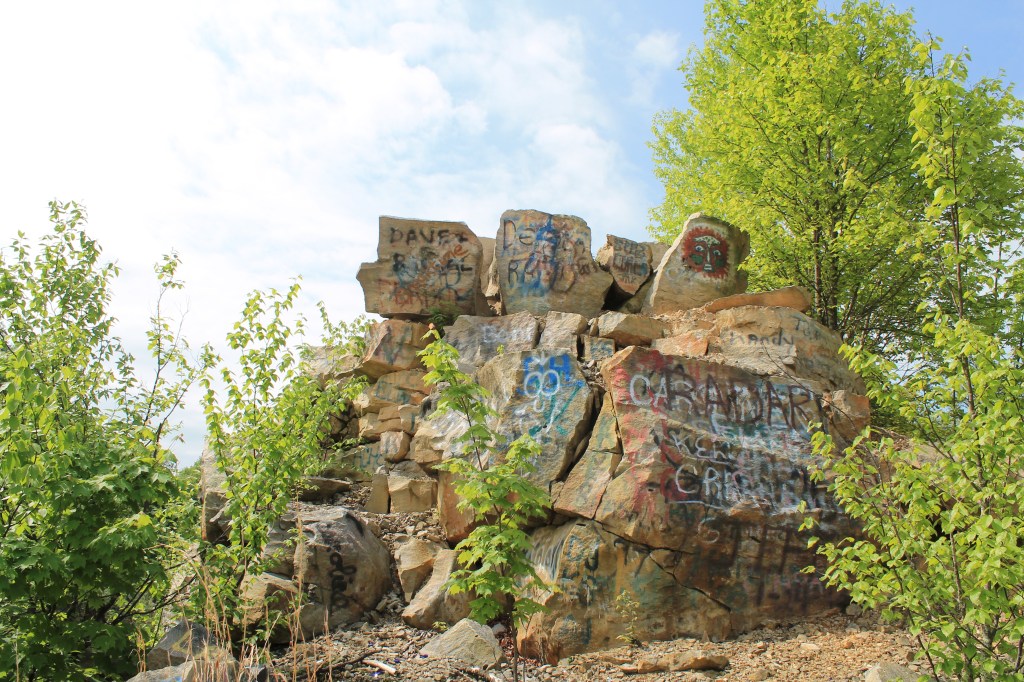

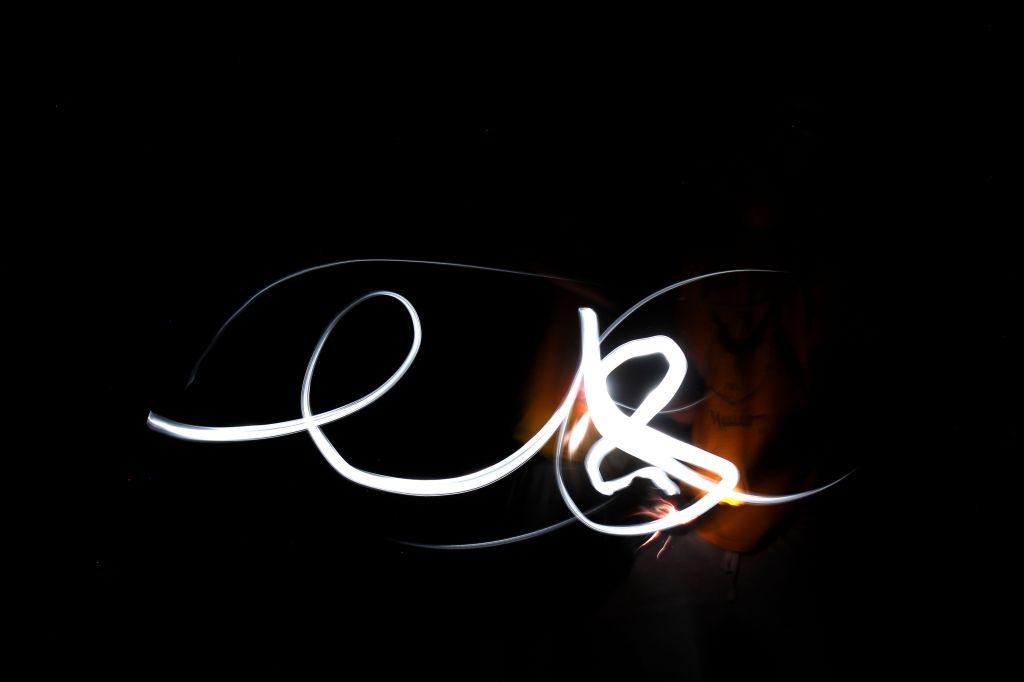
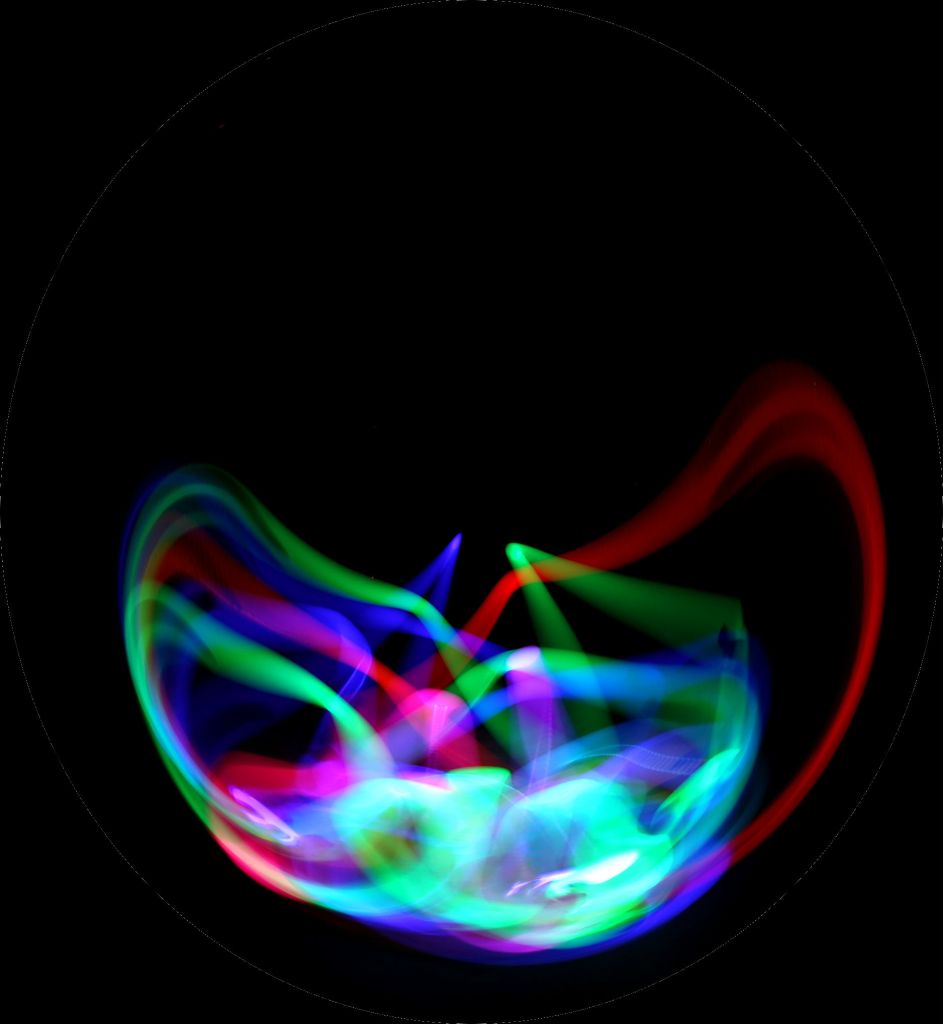
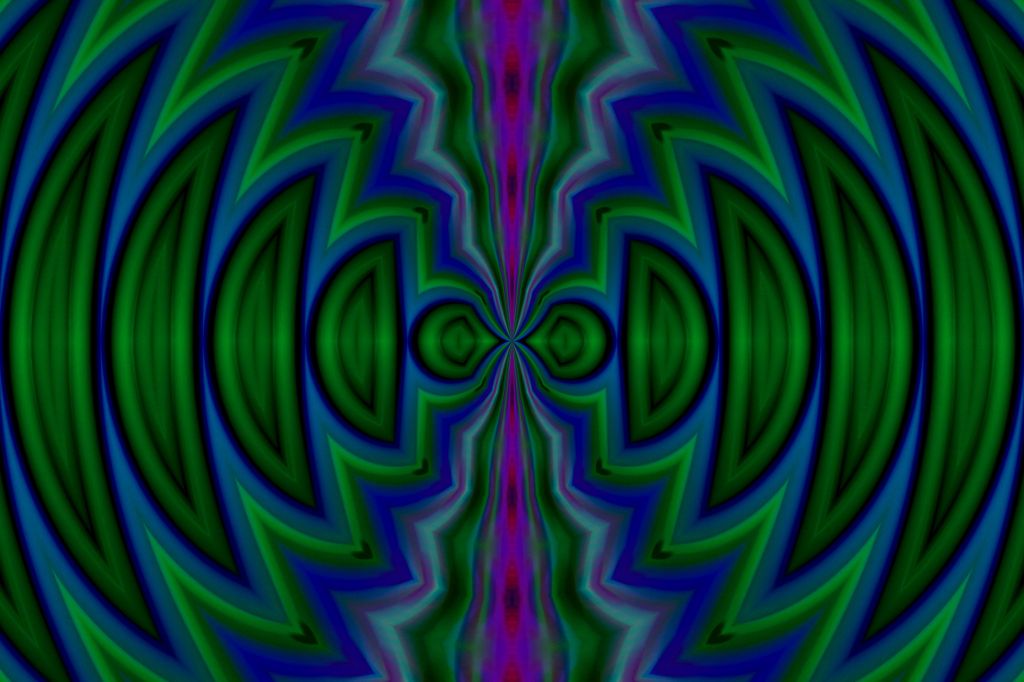



 Samuel Rugg